Paul Nash (1889 - 1946)
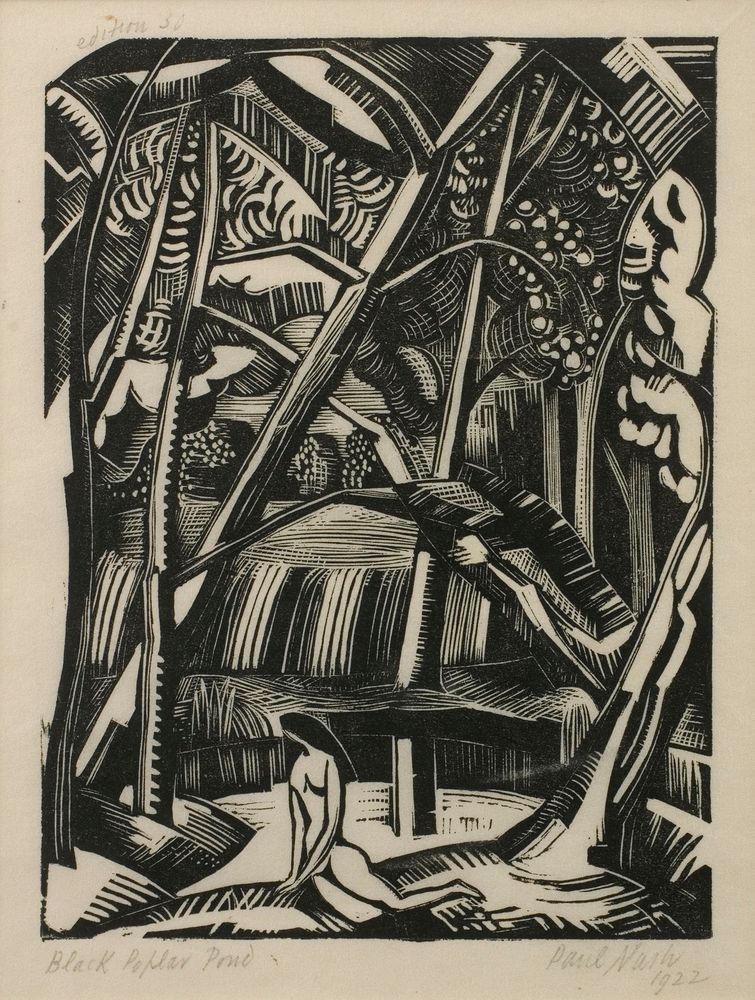
Black Poplar Pond, 1921
Woodcut
15.2 x 11.4 cm
Signed, dated and titled
From the edition of 50
Paul Nash turned to woodcutting shortly after the end of the First World War whilst recuperating in Dymchurch from the effects of mustard gas and other chest injuries. It was the first time Nash had worked in a medium with which he was largely unfamiliar. His earlier printmaking experience had been confined to lithography - a practice that required skills he already possessed. Although his early efforts were comparatively crude, within a year he had fully mastered the technique of woodcutting.
Early in his artistic career Nash had the ambition of becoming a book illustrator, a path he only embarked on once he was well established, at the age of twenty-eight. The majority of his woodcuts were made as book plates, rarely did he make a print as part of a standalone edition. These works marked a clear departure from his wartime imagery: mysterious yet tranquil landscapes and meditative still lifes offered a form of escape from the horrors he had previously depicted, whilst also foreshadowing his later surrealist paintings.
Nash abandoned woodcutting in 1929 when he joined the gallery, Arthur Tooth & Sons, which encouraged his focus on painting and colour lithography. Although he continued to find success with other forms of print making, it is his woodcuts that stand out amongst the very best of his printmaking career.