

Britain on the Move: British Art through the Twentieth Century
19th November 2026 - 9th January 2027

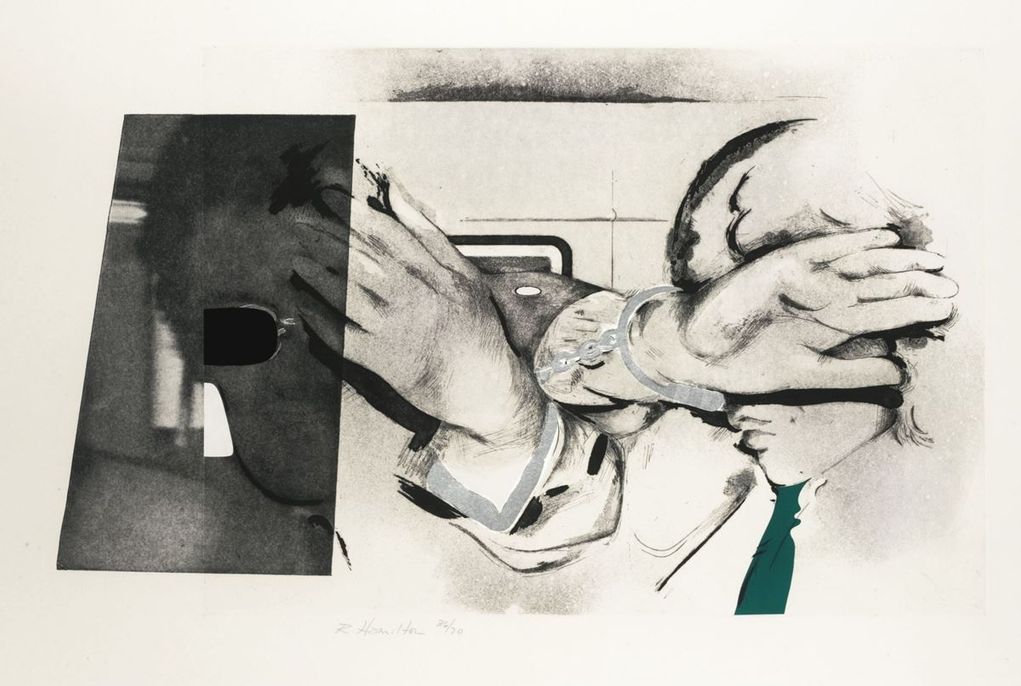
Richard Hamilton, Swingeing London 67, 1968
We are delighted to collaborate with Julian Page with an exhibition of Twentieth Century British Art at his project space in Chichester (West Sussex) from 19 November 2026 - 9 Janaury 2027.
Featuring works by: Eileen Agar, Patrick Caulfield, Helen Chadwick, Ithell Colquhoun, Tracey Emin, Naum Gabo, Richard Hamilton, David Hockney, Leslie Hurry, Allen Jones, David Jones, Peter Lanyon, George Mackley, Paul Nash, Ben Nicholson, Grace Pailthorpe, Claughton Pellew, Roland Penrose, Monica Poole, Peter Rose Pulham, Eric Ravilious, Bridget Riley, Jeffrey Steele, Peter Sedgley, Edward Wadsworth, Alfred Wallis, John Wells, Mary Wykeham, Rachel Whiteread.
Preview
Wednesday 18 November: 5:30pm - 7:30pm
Address
12 Northgate, Chichester, PO19 1BA
Opening Hours
Mon to Wed: by Appt. Thurs to Fri: 11am-4pm; Sat: 11am-2pm
Overview
The Twentieth Century was a period of profound change, nowhere was this more evident than in the British art scene. Britain on the Move explores some of the major artistic movements of the period and the artists who defined them. From the revival of wood engraving to the controversial Young British Artists (YBA), each movement challenged and broke with the conventions of its time.
The exhibition begins with the woodcuts of the 1920s, a decade which saw a revival in the medium, cementing itself in the avant garde. The work was ambitious and progressive with woodcutting evolving into one of the most influential British movements of the early 20th Century. Exhibited is Edward Wadsworth’s final woodcut Still Life (1921) with alongside works by Paul Nash.
British Surrealism, which rejected rational thought in favour of ideas around the subconscious, is represented by Roland Penrose’s significant and dreamlike painting Cat and Fly (1948). Penrose played an instrumental role in organising the seminal 1936 International Surrealist Exhibition at the New Burlington Galleries, alongside figures including David Gascoyne, Henry Moore, Paul Nash and Ben Nicholson. The exhibition’s success helped establish Surrealism in Britain and gave artists greater confidence to explore this new form of expression.
Pop Art is also represented by Richard Hamilton’s influential work Swingeing London 67 (1968). Challenging the idea of art as an elite pursuit, Pop Art embraced the imagery and ideas of popular culture. In Swingeing London 67, Hamilton reworked the now-iconic newspaper photograph of Mick Jagger and art dealer Robert Fraser handcuffed together following a high-profile drug raid. The work critiques media sensationalism while capturing the spirit of the countercultural moment.
Perhaps no movement has proved quite so controversial in British art as that of the Young British Artists (YBAs), represented here by a text-based work by Tracey Emin Kiss Me, Kiss Me, Cover My Body In Love (1996). Created two years before her now legendary piece My Bed (1998), this confessional work documents the most painful years of Emin’s life blurring the boundary between art and autobiography, whilst commenting on taboo issues such as abortion and loss.
Many of the ‘movements’ featured in the exhibition were loosely defined, and artists often resisted being associated with a single label. Nevertheless, these movements provide a valuable overview of the period’s art history, revealing a British art scene in a state of constant change and reinvention.