Wood Work
5th December 2025 - 30th January 2026
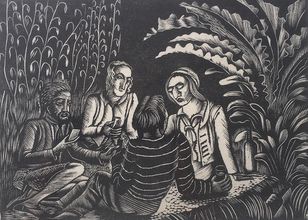
British Woodcuts and Engravings from the 20th Century
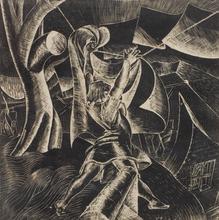
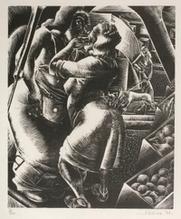
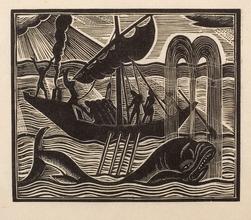
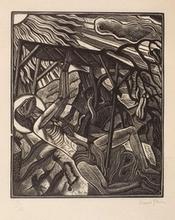
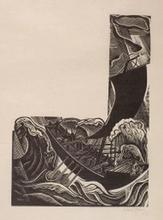
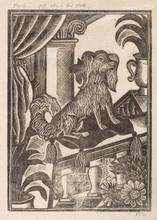
In 1828 Thomas Bewick, the leading practitioner of wood engraving, died. With his death wood based printmaking fell into obscurity and illustrators and other draftsmen increasingly favoured traditional etching. It would be over fifty years before wood cut printing was revived, re-emerging as the dominant style of printmaking within the German Expressionist movement. Being both adaptable and inexpensive in its production, it suited the burgeoning groups of artists of the early twentieth century. By the 1910s the woodcutting revival had found its way back to Britain, where it became firmly cemented in the avant garde. The work was progressive and ambitious with woodcutting evolving into one of the most influential British movements of the early twentieth century.
The height of its popularity in Britain came with the emergence of independent publishers, most notably The Golden Cockerel Press and Gregynog Press. These publishers commissioned artists to illustrate special editions of classical books. The woodcut and engraving became a leading form of not only artistic expression, but also a way in which an artist could earn their living. The income may have been small, but the lack of commercial pressure meant that artists could take greater risks and fostered experimentation. Whilst it fell out of popularity in the 1930s, with a shift towards colour lithography, woodcutting lay the foundations for both the surrealist and neo-romantic movements that would define the rest of the prewar era.
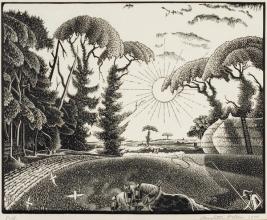
Producing prints for a woodblock required very simple tools and organic materials: the expertise lay in the exceptional skill and precision of the maker. The practice followed the ancient tradition of carving, where craftmanship held as much importance as artistic expression. Many of the artists were young men returning from the horrors of war who found catharsis in the act of carving. The artist Eric Ravilious was noted for sitting “by the window with his wood-cutting block of boxwood and a leather cushion under it - turning it this way and that as he went on cutting, and whistling all the time as beautifully as any bird - always on the in-breath, never the out.” Mary Branson in Ravilious Engravings, Jeremy Greenwood, The Wood Lea Press, Suffolk, 2008, p.8 With its roots in nature and the capacity for escapism, the woodcut and engraving leant itself to depictions of mysterious often dreamlike landscapes.
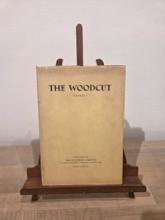
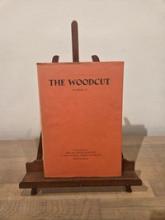
Paul Nash, one Britain’s leading woodcut makers of the 1920s, captured this relationship when he wrote: "Wood seems to yield to the evolution of an abstract design or a decorative arabesque as stone excites the sculptor to the creation of pure form. For it is the glyptic character of engraving on wood which is its peculiar charm, the more the engraver cuts into his block the greater his sense of contact with the reality of his expression.” Paul Nash in the Woodcut: An Annual, 1927
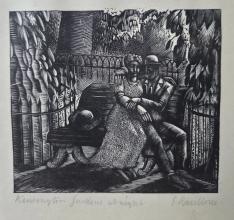
This online exhibition looks at several British artists who employed the woodcut and wood engraving during the better part of the 20th Century; both those who led the way and those who followed in their footsteps.
Sam Haile, David Jones, George Mackley, Paul Nash, Claughton Pellew, Monica Poole, Eric Ravilious, Edward Wadsworth.
Please contact the gallery to view the works.